
Select where you want to go on this page
Overview
We built this part of the website to provide information, videos, tools, checklists and other resources for allied health professionals and assistive technology advisors who work with people with acquired brain injury, their families, friends and other key supporters.
My Technology Space
My Technology Space has been designed to work through the good practice steps of assistive technology provision. Information is provided across six sections. There are also some checklists and tools to document key information gained from each step in the process.
When using My Technology Space, you may choose to:
- work through all of the content on the website
- focus on key topics as a starting point.
What is assistive technology?
Assistive technology, sometimes called ‘AT’, includes both products a person might use (like a smartwatch or mobile phone) as well as services (like allied health professionals or other assistive technology advisors) that help with needs assessment, goal setting, product selection, setup, training and/or use.
Assistive technology can be used following acquired brain injury to:
- make it easier for a person to do things
- promote independence within chosen activities
- help to keep a person safe, such as through the use of GPS devices
- reduce or remove the need for verbal prompting, cueing or reminders from key supporters
- support the person’s wellbeing so they are happy, healthy and comfortable with their life and what they do.
Assistive technology might be an aid, product or piece of equipment, or a system that may include a combination of products and/or services. Select here for more information about assistive technology from the World Health Organization.
Everyone’s needs are different, and there is not a ‘one size fits all’ solution. Tailored assistive technology products and services that link to a person’s activity goals and the context for or environment in which they complete these activities is important.
The Human Activity Assistive Technology Model
The Human Activity Assistive Technology Model, also known as the HAAT Model, can be a useful way to think about a person’s activity goals, the context for or environment in which they complete these activities, and the types of assistive technology that may assist them following brain injury.
The model shows the interaction between concepts - the human, their activities and assistive technology - and the relationship each can have on the other. It also highlights the importance of context or environment.
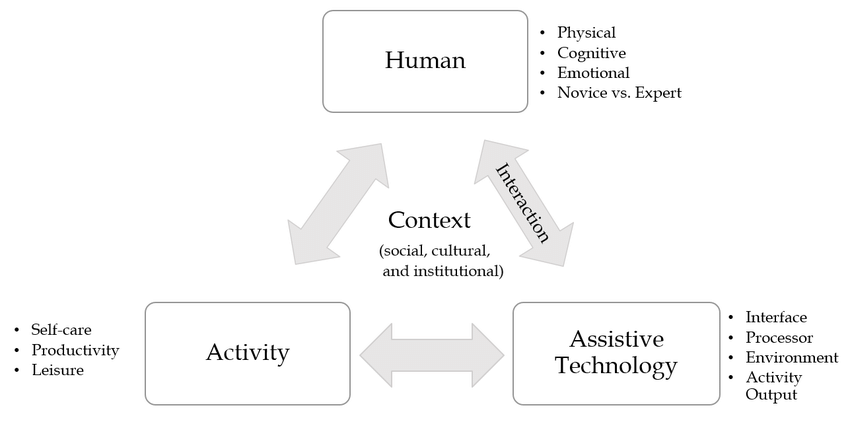
Figure: The Human Activity Assistive Technology Model (reproduced under CC BY from Elsahar et al., 2019).
The World Health Organization 5P People-Centred Assistive Technology Model
The World Health Organization has created a ‘5P’ people-centred assistive technology model (see below). The model suggests that people with disabilities should be able to access the assistive technology supports they need to help in their day-to-day lives. Understanding this model and the concepts within it can be used by allied health professionals when planning and thinking about the use of assistive technology for people following brain injury.
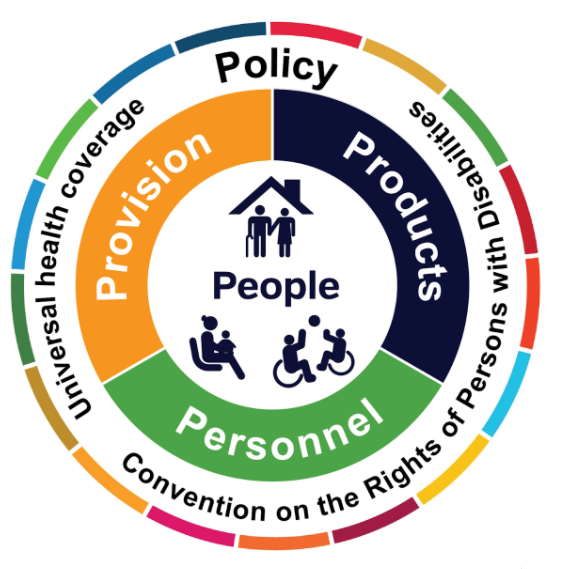
Source: Policy brief: Access to assistive technology. Geneva: World Health Organization; 2021.
The model suggests it is important to think about:
- the people using the assistive technology
- relevant policy
- the products available
- provision of assistive technology
- personnel who can help with assistive technology.
You can read more about the WHO 5P people-centred assistive technology model below.