
Select where you want to go on this page
About Imani and her goal
Imani is 48 years old, and is an NDIS participant.
She lives on her own.
Imani has an acquired brain injury. She now has difficulty with:
- remembering to do things
- planning things for herself
- getting started and completing activities in her day-to-day life.
Imani had a short-term goal she wanted to work towards over the next 12 months.
This goal was to develop daily care and life skills – so she can do more things on her own every day.
She wanted to sort her travel photos.
Imani also had a long-term goal - something she wanted to work towards in the future.
This goal was to either:
- create an electronic photobook
- display the photos on a digital photo album.
Imani thought her short-term goal would help with her long-term goal.
Imani’s current supports
Imani needs support with tasks during the day. She has support from:
- her mother - who helps Imani with day-to-day tasks.
- an occupational therapist - who helps Imani find ways to do everyday tasks
- a social worker - who helps Imani build her skills and manage problems in her life.
Imani’s future supports needs
Imani talked to her occupational therapist about her goals.
They talked about the supports she needed to reach her goal.
Her occupational therapist thought assistive technology could help, and Imani agreed.
Choosing assistive technology with Imani
Imani’s occupational therapist thought about assistive technology that:
- met her needs
- was right for her.
Imani’s occupational therapist used a tool called the framework for evaluation of assistive technology to look at 3 assistive technology products:
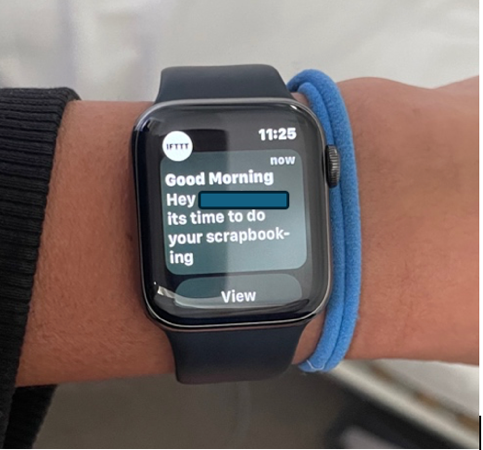
1. Smart watch
Smart watches are a type of wearable assistive technology that you can wear on your body.
A smart watch can:
- keep you healthy
- remind you to do things
- help you plan things for yourself
- help you organise things for yourself
- help you get started and complete activities in your day-to-day life.

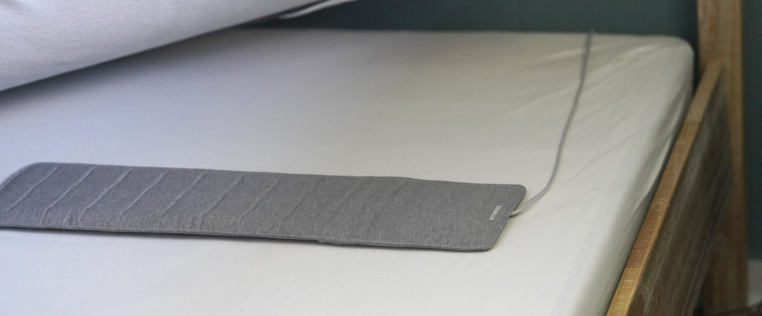
2. Smart sensor
The smart sensor is assistive technology you can use in your home to:
- do more things on your own
- develop your skills.
The sensor can be put anywhere in your home. This includes on:
- doors
- drawers and cupboards
- beds
- furniture, like chairs and sofa.
The sensor can be used to:
- send a message to your mobile phone
- turn on smart lighting.
3. Smart lighting
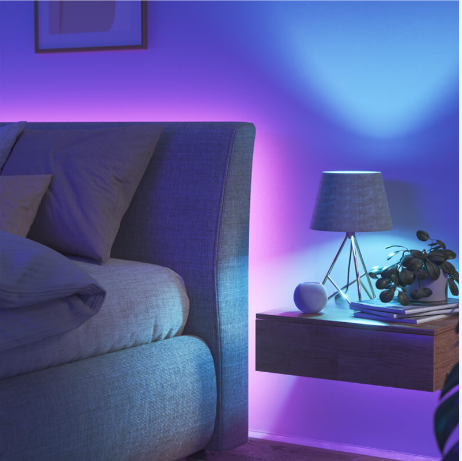
Smart lighting is an assistive technology product that connects to wifi in your home.
Wifi is a way to connect to the internet.
The smart lighting can be turned on by a smart sensor.
You can choose the colour of the bulb.
Imani’s outcomes
Imani wanted to try the smart sensor with the smart lighting. These 2 assistive technologies can work together using an application called, ‘If This Then That’ (IFTT).
Her occupational therapist:
- did the paperwork and sent it to her funding organisation. This included reports and quotes.
Funding is money from the government that pays for supports and services for Imani.
Once Imani had the funding, her occupational therapist went to her home and helped to:
- set up the assistive technology
- show Imani how to use it safely.
Imani wanted the technology to work between 6am and 8.30am. These times were chosen as Imani said she was often bored, and would like to do an activity.
The sensor was put on Imani’s bed.
The sensor was used to:
- send a reminder to her mobile phone
- turn on the smart lighting.
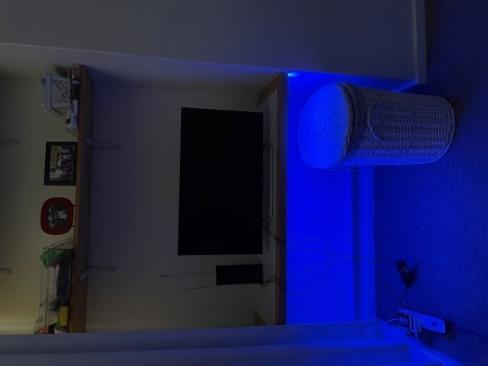
The occupational therapist asked Imani to choose the bulb colour.
She chose the colour blue.
After 2 months of using the assistive technology, Imani and her occupational therapist checked to see if:
- it met her needs
- was right for her.
The assistive technology had helped Imani to sort her travel photos every day.
Imani wanted to keep using the assistive technology to help with her goals.