
Select where you want to go on this page
Overview
Sometimes it can be hard to choose assistive technology that:
- meet your needs
- is right for you.
You can ask someone to help you find assistive technology products, such as:
- your family or other key supporters
- a friend
- your support coordinator
- advocates – someone who speaks up for people with disability
- an assistive technology advisor.
An assistive technology advisor could be an:
- occupational therapist - they can help you find ways to do everyday tasks
- physiotherapist - they can help you with ways to move your body
- speech pathologist - they can help you with how you talk, communicate and swallow
- psychologist - they can help you with the way you think and feel about things
- rehabilitation engineer – they use technology to create things that help you with your disability.
An assistive technology advisor can help you:
- work out what assistive technology you need
- find what assistive technology you need
- do the paperwork your funding organisation needs, including reports and quotes
- set up your assistive technology
- learn how to use it safely.
Funding is money from the government that pays for supports and services.
A tool to help choose assistive technology
We have created a tool for assistive technology advisors to use.
The tool is called the framework for evaluation of assistive technology.
This is a summary of the tool.
A summary only includes the most important ideas.
The tool can be used to help advisors choose the assistive technology that:
- meet your needs
- is right for you.
The tool has 9 main areas for the advisor to think about when choosing assistive technology.
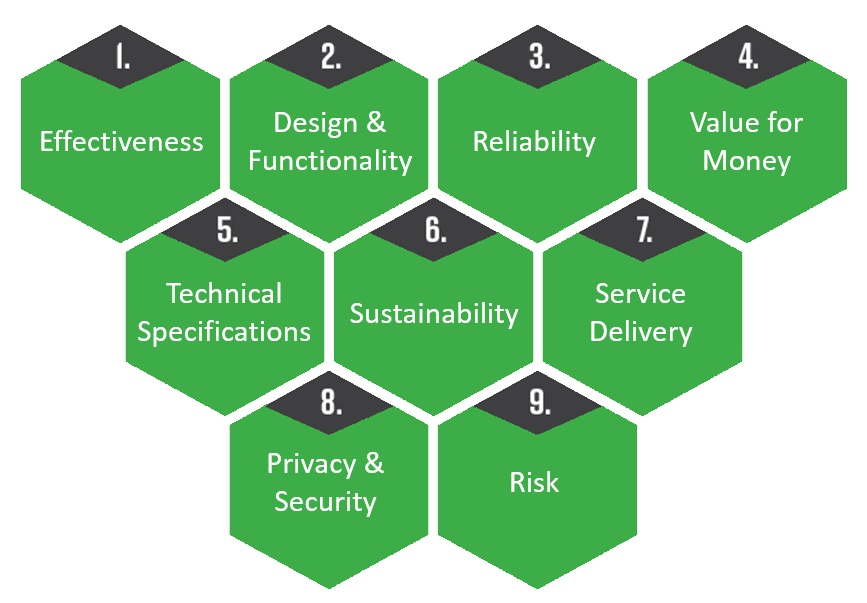
We explain the 9 main areas in more detail below.
1. Effectiveness of assistive technology.
The assistive technology should help to:
- make it easier for you to do things
- keep you safe.
The advisor should look at how the assistive technology will help your:
- life at home
- life at other places, like work
- functional capacity.
Your functional capacity is:
- your ability to do something
- the skills your have and how you use them
- how you manage everyday life.
2. Design and functionality of the assistive technology.
The advisor should think about the design and functionality of the assistive technology.
Design is how the assistive technology looks.
Functionality means how easy it is to use the assistive technology.
This includes:
- set up of the assistive technology
- if you can learn to use it safely
- if you can make changes to make it right for you.
3. Reliability of the assistive technology.
The advisor should think about the number of years the assistive technology will:
- work well
- stay safe to use.
The advisor should also think about any problems you might have using the assistive technology.
For example, some assistive technology needs:
- a battery
- an internet connection.
The advisor should think about how easy it will be to get:
- something fixed or repaired
- something replaced.
4. Is the assistive technology good value?
Assistive technology costs money.
The advisor should think about:
- how much it will cost
- if you have enough money to pay for it.
The advisor can help you shop around to find a good price for your assistive technology.
They can also see if you can try or test assistive technology before you buy it.
The advisor can make sure the assistive technology is:
- right for you
- good value.
The advisor should also think about how much time it will take for you to:
- learn to use it safely
- look after it
- get it fixed or repaired.
The advisor should think about the costs for having your assistive technology:
- looked after
- fixed or repaired.
5. Technical specifications of the assistive technology.
Assistive technology sometimes needs an internet connection.
The advisor will need to check you have a broadband connection.
Broadband is a way to connect your assistive technology to the internet at home.
You may need to use more than 1 type of assistive technology.
The advisor will need to check all the assistive technology you need will work well together.
6. Looking after, fixing, and replacing assistive technology.
Assistive technology can get old quickly.
Your advisor should help you buy assistive technology that is:
- new
- working well.
To keep your assistive technology working well, you may need to:
- look after it
- get it fixed or repaired.
The advisor should check how often you will need to:
- look after it
- get it fixed or repaired.
The advisor should also check when you will need to replace your assistive technology.
For example, if you will need to replace the assistive technology in:
- 12 months
- 1 to 3 years
- 3 or more years.
7. Service delivery for the assistive technology.
You can buy assistive technology:
- in places you usually shop, like a chemist
- online
- from specialist stores and suppliers.
You should only buy the assistive technology you need from people or stores you can trust.
Sometimes when you buy assistive technology you get a warranty.
A warranty is a promise from the seller to fix a problem.
The advisor should check:
- if a warranty will cost more money
- how the assistive technology can be fixed or repaired.
The advisor should also check what happens if:
- something is wrong with the assistive technology
- you want the seller to fix the problem.
8. Privacy and security when using the assistive technology.
When you use assistive technology there can be some dangers.
The advisor should think about your:
- privacy
- security.
Privacy means your personal information is not told or shown to anyone.
Security means your personal information is safe.
Personal information is anything that is about you. This could be:
- your name
- your address
- job or activities you do each day
- information about your disability
- username and passwords.
A username can be your own name or something you make up.
Passwords help keep your information private. It can be a made up word using letters, numbers, and symbols.
9. Risks involved in using the assistive technology.
The advisor should think about if there are any risks of you using the assistive technology.
They need to think about what will happen to you or a support person if something with the assistive technology:
- goes wrong
- is not working well.
How to get the tool.
To get the tool, you or your assistive technology advisor need to fill out a survey.
The survey has 10 questions. The survey will take you 5 minutes to fill out.