
Select where you want to go on this page
About Josh and his goals
Josh is 30 years old, and is a TAC client.
He lives with his mother and father.
He has a busy life, works 15 hours a week, and enjoys:
- ballroom dancing
- playing games on his computer and phone.
At the age of 21, Josh had a car accident which led to an acquired brain injury. Josh now has difficulty with:
- remembering to do things
- planning things for himself.
Josh wanted to be more independent – so he could do things for himself.
He found verbal prompts from his support workers annoying.
He thought his support workers were “nagging” him.
He had 4 goals. He wanted to:
- remember to take his medication in the morning
- prepare his own meals every day
- remember to put the bins out on Sunday night
- plan what items he needs when going out to work, and ballroom dance classes.
Josh’s current supports
Josh has support from:
- 2 support workers who help Josh with day-to-day activities
- an occupational therapist - who helps Josh find ways to do everyday tasks.
Josh’s future supports needs
Josh talked to his occupational therapist about his goals.
They talked about the supports he needed to reach his goals.
His occupational therapist thought assistive technology could help, and Josh agreed.
Choosing assistive technology with Josh
Josh’s occupational therapist thought about assistive technology that:
- met his needs
- are right for him.
Josh’s occupational therapist used a tool called the framework for evaluation of assistive technology to look at Sofihub.
Sofihub is an assistive technology product that can help you:
- do more things on your own
- develop your skills.
Sofihub can be set to communicate with you at any time:
- in the morning
- in the afternoon
- overnight.
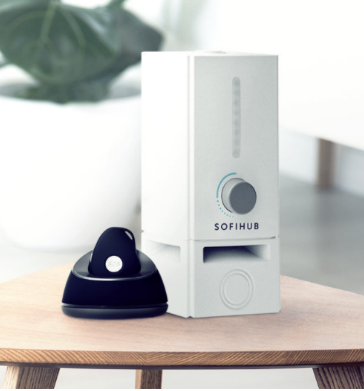
Movement sensors can be put in your home.
The sensors help Sofihub know when you are nearby.
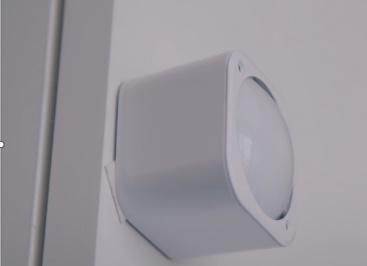
This could be on:
- doors
- drawers and cupboards
- beds
- furniture, such as chairs and sofa.
Sofihub will only communicate with you:
- at set times of the day and week that you choose
- when you are near one of the sensors in your home.
Sofihub can be used to help you remember to do activities or tasks. For example to:
- take medication
- prepare meals
- put the bins out
- take items with you when going out of the house.
Josh’s outcomes
Josh wanted to try Sofihub so his occupational therapist:
- did the paperwork and sent it to his funding organisation. This included reports and quotes.
Funding is money from the government that pays for supports and services for Josh.
Once Josh had the funding, Sofihub staff went to his home to:
- set up Sofihub
- show Josh how to use it safely.
Sofihub was set up to help Josh remember to:
- take his medication in the morning
- prepare his own meals every day
- put the bins out on Sunday night
- take the items he needs when going out to work, and ballroom dance classes.
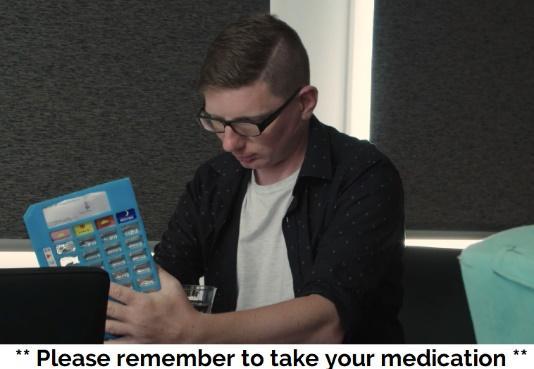
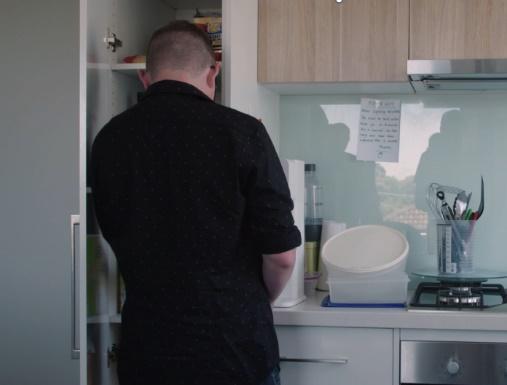
After 3 months of using Sofihub, Josh and his occupational therapist were asked if:
- it met his needs
- was right for him.
Josh said:
“… people like myself, who have a brain injury, tend to forget. The benefits of Sofihub are it helps prompt myself as a user to go and do a task. Like I use one to have my medication in the morning, or make breakfast …until you get to the point where you can do it on your own, and the prompts are just there, but just in the background …”
His occupational therapist said:
“Sofihub provides medication prompting support, reminders to get ready for a work shift, have a meal, or putting the bins out. At times where no one else is there, it offers prompting at important times but interestingly also offers company or a ‘presence’ for Josh. External prompting from others wasn’t always successful as Josh could get upset at what he felt were others ‘nagging’ him.”
They were asked:
- about the design of Sofihub – how it looks in his home.
- if it was easy to use.
Josh said:
“The Sofihub design is quite good – it is tall, but it is not over the top tall where you can’t put it on an entertainment cabinet. To set it up, put in reminders, set the volume, change the language, it is quite good – you have to do it on a computer by logging into the Sofihub portal or I found the app. If you think she talks too fast, you can slow it down. She’s a lady, but you can change it to a male and I changed it to an Aussie accent but it was a bit yobbo so I changed it back to British.”
His occupational therapist said:
“The actual product provides external prompting and can be customised to a client’s needs - this is what we are looking for. Josh is very tech savvy and can adjust Sofihub himself.”
Josh and his occupational therapist were asked if there had been any problems using Sofihub and if something:
- had gone wrong
- was not working well.
Josh said:
“I rang the company to come out and change the batteries and they can’t come out [this was because of Covid-19 restrictions]... the batteries have been flat for a while but the Hub is still squawking at me, so I don’t need the sensors to be on for it to work because I just use time-based reminders. I’ve noticed if the actual Hub goes down, Sofihub will send me an email to let me know. On my portal there is also an option to connect through my own wifi [to connect to the internet], because I live semi-rural and I’ve noted that 4G has a bit of ‘hit and miss’ down here. There might be a dead spot. Luckily I have found I can connect through the home internet if needed, in case I lose 4G.”
His occupational therapist said:
“For Josh, this product is not a robot - it doesn’t stand him up and make him go over and have lunch, for example. He can ignore it at times, and that is when back up systems like his support workers checking his medication pack as required. Sofihub is not seen as a complete replacement for other supports Josh requires because of his acquired brain injury, like checking by his support workers or low or no-tech options like visual prompts near his coffee machine.”
They were asked about the cost of Sofihub.
Josh said:
“I am lucky that I have TAC funding and TAC covered the unit, and they pay the monthly fee for me. I have looked online and I forget the exact figures but what I understand is there is an ongoing cost for the maintenance of the machine, the wifi and updates.”
His occupational therapist said:
“Sofihub has reduced the number of hours of support worker care Josh receives every week - this is really important to Josh who can find a support worker with him more frequently can distress him. It offers Josh more privacy and dignity of risk and it offers the funder a cost-benefit.
Josh and his occupational therapist were asked about the privacy and security of Sofihub.
Privacy means that any person has the right to not have their personal information told or shown to anyone.
Security means keeping your personal information safe.
Personal information is anything that is about you. This could be:
- your name
- where you live
- your job or day activities
- information about your disability.
Josh said:
“I was asked if I wanted to nominate anyone to be able to log in, and I nominated my occupational therapist. She has been really onboard with Sofihub.”
His occupational therapist said:
“I could log in and have a look, but I have chosen not to as my role is really as Josh’s liaison person - the back up system of support workers checking on missed medications means we don’t need this additional layer of surveillance. I haven’t reviewed the Sofihub privacy policy on behalf of Josh. He has good capacity to make this assessment himself - other clients may need my support. It was important to note that there are only motion sensors, not cameras and that increases privacy.”
Finally, they were asked if there were any risks of using Sofihub.
Josh said:
“If the 4G internet goes down, that’s a problem as I can’t receive prompts. I have to tether Sofihub to my phone’s wifi in that case.”
His occupational therapist said:
“The tasks we are using Sofihub for are not life or death. Josh only has 1 medication time every morning. If it is missed once, it is not life threatening. I think I’ve had about 3 messages from Sofihub in about 2 years. I have checked with Josh every time and they have all been false alarms, which he has gone on to notify Sofihub of. Josh has the backup of weekly support from two trusted support workers who note and report missed medications.”