
Select where you want to go on this page
About Michelle and her goal
Michelle is 58 years old, and is an NDIS participant.
She lives in a house with her daughter and a pet cat.
Michelle has an acquired brain injury. She now has difficulty with:
- remembering to do things
- planning things for herself
- getting started and completing activities in her day-to-day life.
Michelle wanted to be more independent – so she can do more things on her own every day.
Michelle had a goal to remember to do daily personal activities. For example, make breakfast.
She no longer wanted her support workers to remind her to do this activity every day.
Michelle’s current supports
Michelle needs support with tasks during the day. She has support from:
- support workers - who help Michelle with day-to-day activities
- an occupational therapist - who helps Michelle find ways to do everyday tasks
- a physiotherapist - who helps Michelle with ways to move her body
- a psychologist - who helps Michelle with the way she thinks and feels about things
- a dietitian – who helps Michelle with how to make healthy choices about what she eats and drinks.
Michelle’s future supports needs
Michelle talked to her psychologist about her goal to be more independent.
They talked about the supports she needed to reach her goal.
Her psychologist thought assistive technology could help, and Michelle agreed.
Choosing assistive technology with Michelle
Michelle thought that a voice message would help her to remember to make her breakfast.
Michelle’s psychologist thought about assistive technology that:
- met her needs
- was right for her.
Michelle’s psychologist used a tool called the framework for evaluation of assistive technology to look at 3 assistive technology products:
1. Smart watch
Smart watches are a type of wearable assistive technology that you can wear on your body.
A smart watch can:
- keep you healthy
- remind you to do things
- help you plan things for yourself
- help you organise things for yourself
- help you get started and complete activities in your day-to-day life.

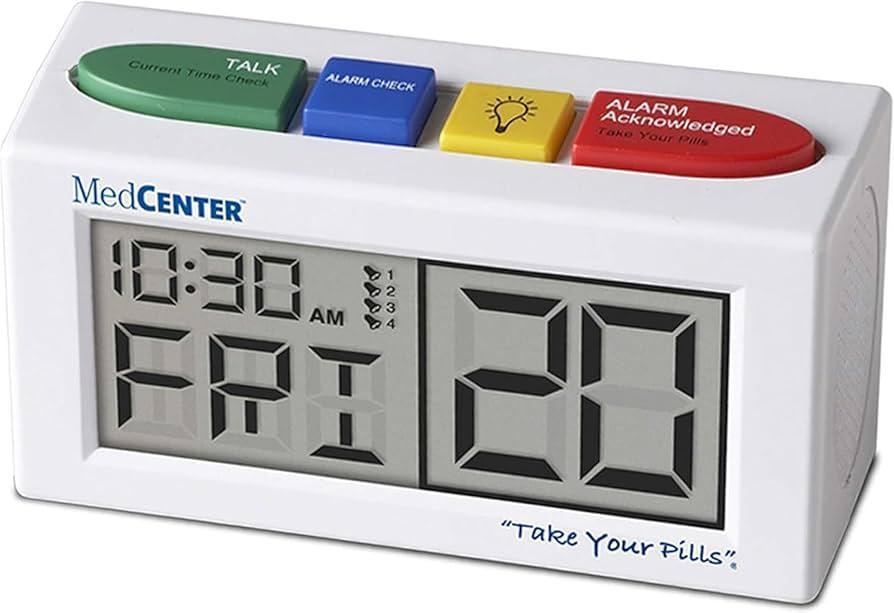
2. Reminder clock
Reminder clocks are assistive technology to help you remember to do day-to-day tasks. For example:
- to take your medication
- to go to an appointment.
Reminder clocks can help you remember a task at any time:
- in the morning
- in the afternoon
- overnight.
Reminder clocks can help you remember a task using:
- a voice message
- an alarm which plays a sound, or vibrates.
3. Sofihub
Sofihub is an assistive technology product that can help you:
- do more things on your own
- develop your skills.
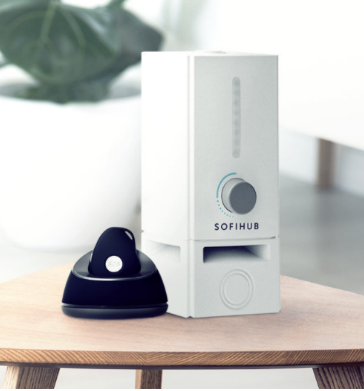
Sofihub can be set up to communicate with you at any time:
- in the morning
- in the afternoon
- overnight.
Movement sensors are put in your home.
The sensors help Sofihub know when you are nearby.
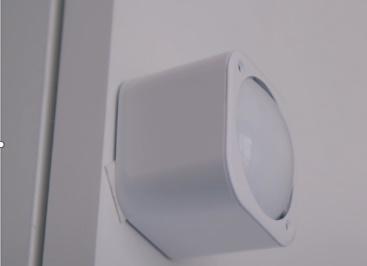
This could be on:
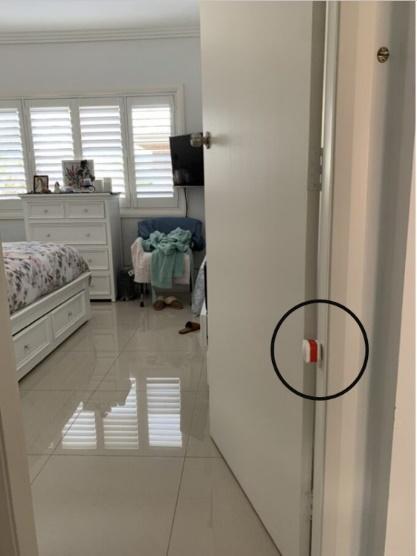
- doors
- drawers and cupboards
- beds
- furniture, such as chairs, table and sofa.
Sofihub will only communicate with you:
- at set times of the day and week that you choose
- when you are near one of the sensors in your home.
Sofihub can be used to help you remember to do activities or tasks. For example to:
- prepare meals
- take medication
- put the bins out
- take items with you when going out of the house.
Michelle’s outcomes
Michelle wanted to try Sofihub so her psychologist:
- did the paperwork and sent it to her funding organisation. This included reports and quotes.
Funding is money from the government that pays for supports and services for Michelle.
Once Michelle had the funding, her psychologist went to her home and helped to:
- set up Sofihub
- show Michelle how to use it safely.
Sofihub was set up to help Michelle remember to make breakfast 6 times a week.
She only wanted Sofihub to communicate with her on:
- Monday
- Tuesday
- Wednesday
- Thursday
- Friday
- Saturday.
Michelle did not need Sofihub to communicate with her on Sunday. On Sunday Michelle’s daughter makes her breakfast.
A movement sensor was placed on the door of Michelle’s bedroom.
Sofihub was set to communicate with Michelle from 9.15am to 9.30am on Monday to Friday.
On Saturday Sofihub was set to communicate with Michelle from 9.30am to 9.45am.
These times were chosen as this is when Michelle wakes up in the morning.
Sofihub would say: “Good morning Michelle, it is time to make your breakfast”
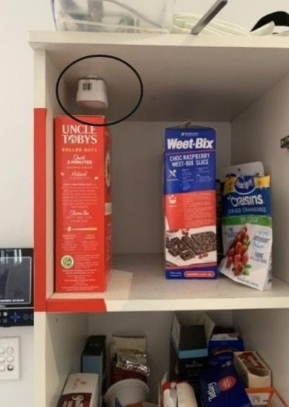
A sensor was placed in a cupboard above a cereal box.
There was also a sensor on the microwave door.
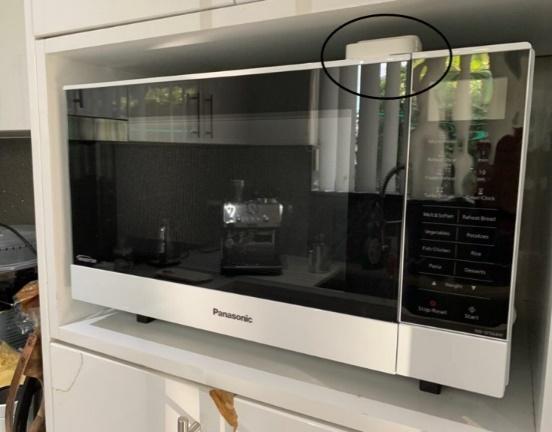
The sensors helped Sofihub know if Michelle was nearby.
If there was no movement at the sensor, Sofihub would communicate with Michelle every 5 minutes.
Sofihub would say: “Hi Michelle, have you started making your breakfast”
After 3 months of using Sofihub, Michelle and her psychologist checked to see if:
- it met her needs
- was right for her.
Sofihub had helped Michelle to make her breakfast some days, but not every day. She said:
“Yeah, there was a big improvement. I think because Sofihub gave me confidence... it improved because of the voice prompts, I started to remember. It made me get up to make breakfast, not the support workers.”
They decided that Sofihub was not the right technology for Michelle. She said:
“I loved that Sofihub talked to me when I first had it in my home, I felt less alone. At the start I needed the three reminders, but by the end I didn’t need it, it became annoying. Also, we set the time for when I would normally get up, but that changed when I got sick. It would have been good if the sensor knew it I was there, rather than wait for that time.”
Michelle asked her psychologist to take Sofihub away.
Michelle and her psychologist are now looking at other supports to help reach her goal.