
This section of My Technology Space provides information and resources to assist allied health professionals and assistive technology advisors with decision-making when selecting assistive technology with people following acquired brain injury.
A person with an acquired brain injury may - with the support of an allied health professional or assistive technology advisor - identify the need for assistive technology as a future supports to help with their cognitive difficulties. Assistive technology may be useful in supporting the person with their cognitive function and include memory, planning, organising and problem solving, and starting and completing activities.
Assistive technology may be implemented across various settings, such as the home, community and other environments, such as study and/or work contexts. It may help the person with their everyday activities, such as study and/or work, their health and well-being, to become independent, to modify their home environment and/or vehicle use.
When selecting assistive technology, it is important for health professionals or assistive technology advisors to get to know the person and their goals, including the types of assistive technology they believe are a good fit for their needs and goals. Reflecting on the person’s preferences, contextual factors and goals are important in arriving at a decision about which assistive technology to select and trial. It is also important for allied health professionals to consider the ‘pros and cons’ of technology product options available in the current market.
Allied health professionals and assistive technology advisors may ask questions when selecting assistive technology options with the person, linked to their activity goals and preferences, including:
- Using a Framework for Evaluation of Assistive Technology
- Selecting a product for trial
- Reflecting on decision-making
Select where you want to go on this page
Using a Framework for Evaluation of Assistive Technology
This section of My Technology Space provides information and resources to assist allied health professionals and other assistive technology advisors to use a Framework for Evaluation of Assistive Technology to consider, compare and select products to trial with the person with brain injury, linked to their activity preferences and goals.
The past decade has seen the development and use of mainstream technologies grow exponentially, and in contrast to the more specialised and costly assistive technology solutions that were previously used.
Electronic assistive technologies, including smartphones, tablets and their mobile applications, home automation systems, and wearable devices, may be considered essential components of everyday life, but can also be used for cognitive support after brain injury.
One of the challenges of assistive technology practice is that product development is occurring at a much faster rate than research to inform evidence-based approaches. For these reasons, people who use assistive technology in their own lives, their key supporters, and those providing assistive technology advice (including allied health professionals and assistive technology advisors) may need a framework for comparison and selection of assistive technologies that could be used for cognitive support after brain injury. To assist, we have developed a Framework for Evaluation of Assistive Technology (FEAT), which has nine domains:
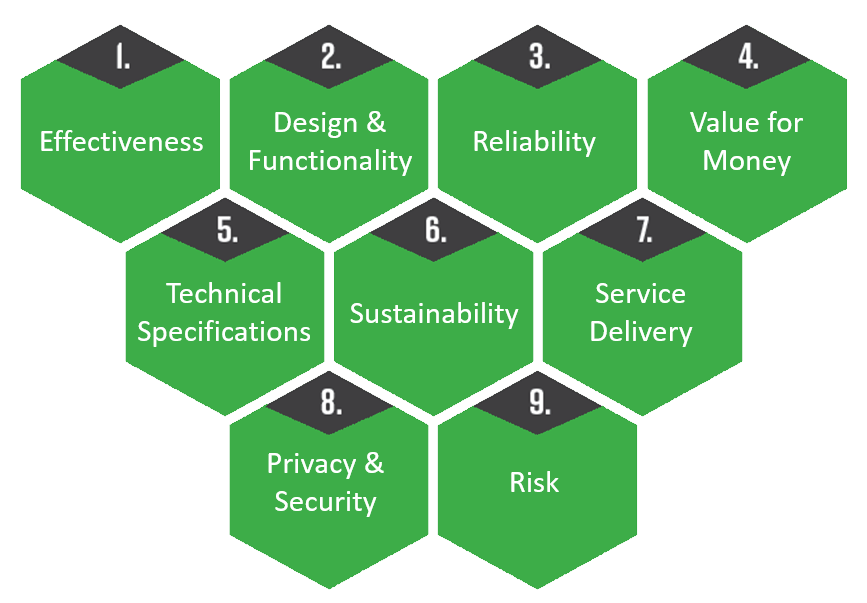
Detail on each of the domains is provided in the table below:
Domain | Detail |
|---|---|
Effectiveness | The extent to which the functioning of the technology improves the assistive technology user's living situation (as perceived by the user and evaluated by the assistive technology advisor) including whether it enhances functional capacity and/or independence, improves safety and/or enables participation in meaningful activities. |
Design and Functionality | The ease of learning to set up, operate and continue to use the technology through its functions and controls, together with the physical design, aesthetics, interface and capacity for personalisation. |
Reliability | The extent to which the technology operates with repeatable and predictable levels of accuracy under all conditions of reasonable use over an extended period of time. |
Value for Money | Whether the investment of money, time or other resources to purchase, use, maintain and service the technology over time represents good value for money. |
Technical Specifications | The key technical specifications of the technology and how compatible it is with other PETs on the market. |
Sustainability | The currency and sustainability of the technology over time (including operating system and network). |
Service Delivery | The quality, timeliness, expertise and reliability of the professional services or technology supplier in providing customer support, repairs and servicing. |
Privacy & security | The usage, privacy, security and storage of data collected through regular use of the technology and regulatory and legal compliance. |
Risk | The likelihood of device malfunction relative to the level of consequence to the user and/or their supporters. |
This Framework for Evaluation of Assistive Technology (FEAT) provides a structured set of questions for use during assistive product exploration. It takes some time to work through, and may require a team approach to consider and answer all questions. The Framework can also help with comparing products in specific technology domains (e.g. comparing different types of medication reminder products). It is provided as a fillable Excel spreadsheet, converting question responses (yes, no, unsure) into a ranking of products across the nine domains, based on the answers provided. It also identifies where more information is required, and has open text boxes for each question in each domain to allow information and notes to be recorded.
Selecting a product for trial
This section of My Technology Space provides information and resources to assist allied health professionals and other assistive technology advisors to select an assistive product for trial with the person with brain injury, linked to their activity preferences and goals.
Once the Framework for Evaluation of Assistive Technology (FEAT) and other assessment processes have been used, the person with brain injury and/or assistive technology advisors working with them may be ready to select a product to trial.
It is important to use the good practice steps of assistive technology provision when selecting a product for trial - see below:
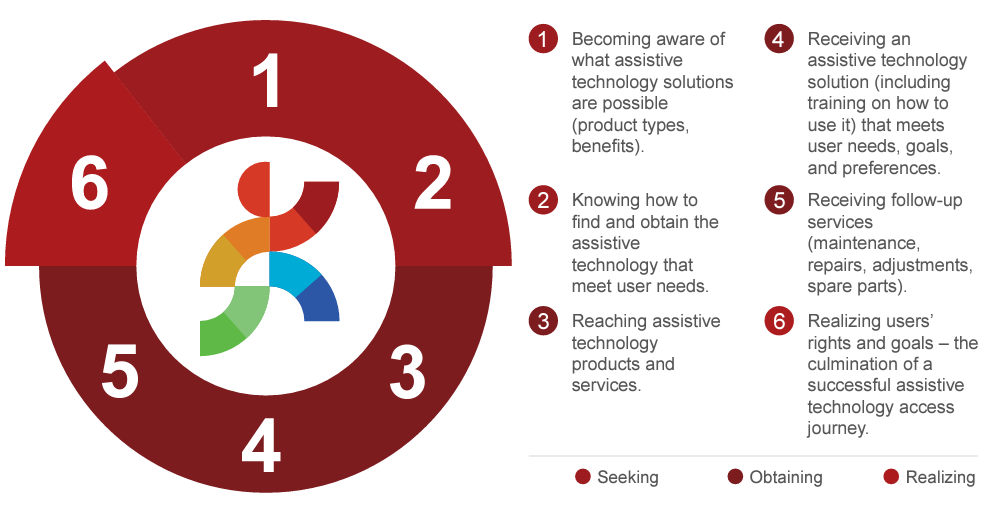
Six steps (in three phases) of the assistive technology access pathway (from WHO & UNICEF, 2022)
Good practice in selecting a product - even if it is just for trial initially - includes ensuring the person and their key supporters receive training on how to use the product; that the product trialled meets the user’s needs, goals and preferences; and that the person knows how to access and can receive follow up services (including maintenance, repairs, adjustments and spare parts, as required).
You may like to read about selecting assistive technology via Katie’s story, or Michelle’s story.
Reflecting on decision-making
This section of My Technology Space provides information and resources to assist the person with brain injury, their families, and allied health professionals and other assistive technology advisors working with them to reflect on decision-making following trial of assistive technology, where its use is either continued or ceased depending upon the outcome achieved.
Reflecting on decision-making about the assistive technology trialled starts with a conversation with the person with acquired brain injury and their key supporters. Returning to information recorded on the Framework for Evaluation of Assistive Technology (FEAT), and updating it based on these reflections, will also be important. Reflection on decision-making may also involve the use of outcome measures, which are provided in the next section of this website. Finally, using the information gained through the trial and selection process, it may be necessary to consider other alternatives that may help the person to achieve their goal, including non-technology options.
The next section of the website will assist you to understand more about measuring AT outcomes with the person, linked to their goals. Select here to go to ‘Outcomes for the person’.